24/7/365. 45 MIN. RESPONSE

1
Jun
How to Choose a Restoration Company in North Texas
When choosing a restoration company it can be one of the most stressful decisions a North Texas homeowner will ever make. You are usually standing in a flooded room or staring at a soot-covered ceiling on one of the worst days of your life, and the pressure to act fast is real. However, hiring the wrong company because they can show up first can create long-term problems that far exceed the original damage. Knowing how to pick a restoration company before disaster strikes puts you in control when it counts most.
What water category tells you about your home
Not all water damage is the same. The ANSI/IICRC S500 standard, the primary regulation governing professional restoration, classifies water by its level of contamination. Category 1 is clean water from a supply line. Category 3 is grossly contaminated water containing pathogens such as sewage. We have responded to North Texas homes after sewage backups where a previous company tried to extract the liquid and dry the carpet without identifying the water category first. That approach traps dangerous pathogens inside your floor and walls. A professional must identify the water category before any drying equipment is set up.
Why certifications matter at the technician level
Many companies claim to be IICRC certified at the firm level, but the certifications that protect your home belong to the individual technicians walking through your door. Look for three specific designations: WRT (Water Restoration Technician), ASD (Applied Structural Drying), and AMRT (Applied Microbial Remediation Technician). The ASD certification is the gold standard for drying complex structural environments. The AMRT is non-negotiable if mold is involved, because it ensures the technician understands containment and pressure differentials. Ask the company directly which of their field technicians hold these credentials before you agree to anything.
The moisture reading that changes everything
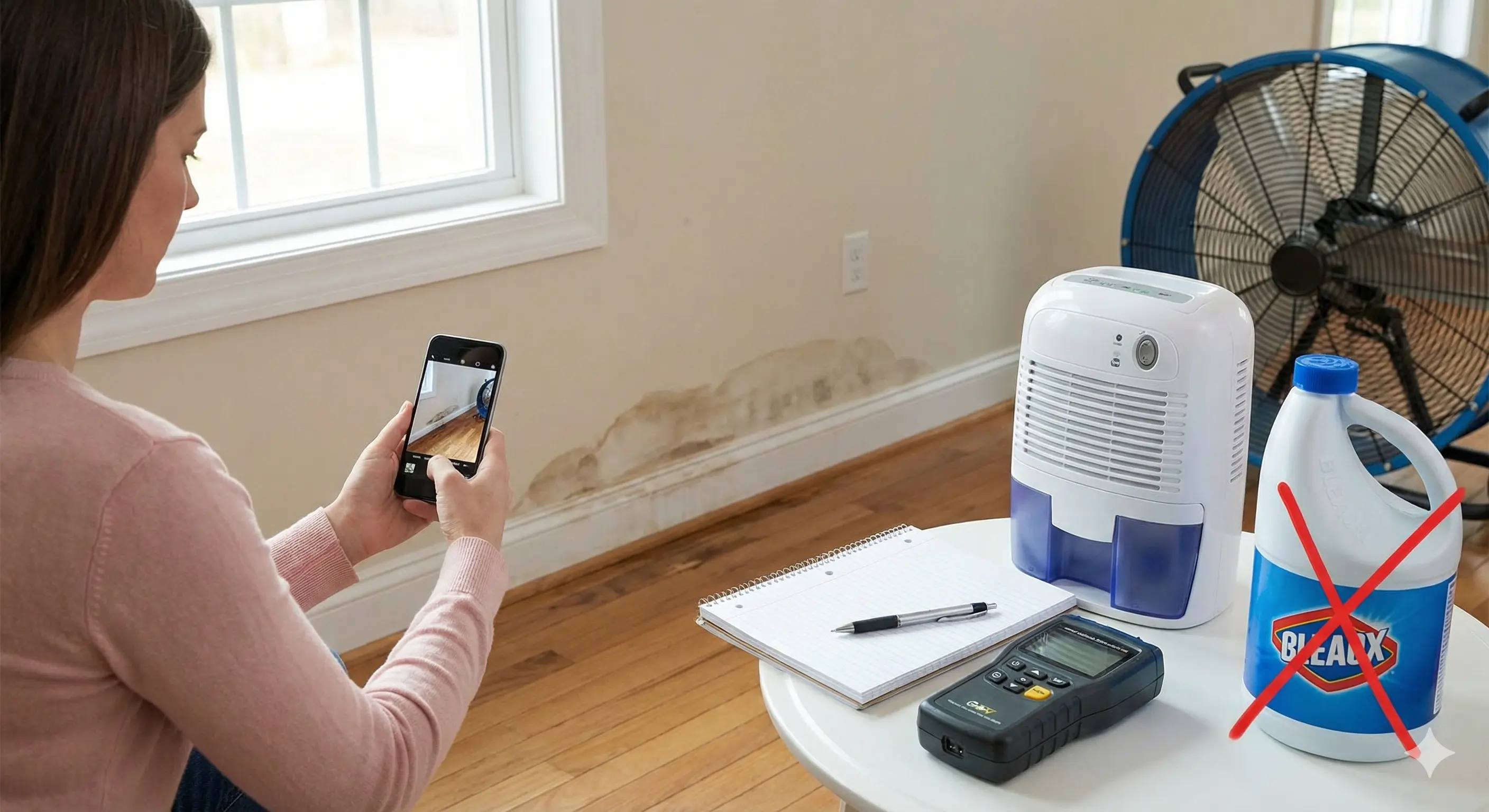
We were called to a Keller home after a budget company had pulled their equipment after 48 hours because the carpet felt dry. Two weeks later the homeowner called us with a persistent musty odor. Using a penetrating moisture probe, we showed her that the sill plates, the wooden boards at the base of her wall studs, were at 25% moisture content. Any reading above 16% is an open invitation for mold. We had to open the drywall and dry the structure properly. A professional will always take moisture readings before declaring a job complete. If a company wants to start demolition before taking baseline readings from an unaffected area of your home, walk away.
How the right company makes insurance easier
A professional restoration company uses the same estimating software insurance carriers trust. By assigning correct industry codes and documenting every step including atmospheric readings, moisture maps, and IICRC-compliant proof of loss, they remove friction from the claims process and give your adjuster exactly what they need to approve the scope of work. This documentation explains why specific equipment was necessary and ensures your policy covers what it should.
One question that tells you everything
Before hiring any restoration company, ask this: do they establish a dry standard by taking baseline moisture readings before they begin? The answer reveals everything about how they work. A company that skips this step is guessing. A company that follows it is following science.
North Texas homeowners deserve restoration professionals who stay on site until the data confirms your home is safe, not until the carpet feels dry.
Latest Posts


Contact Us
For Advice
Need help? Talk to an expert
8175543849